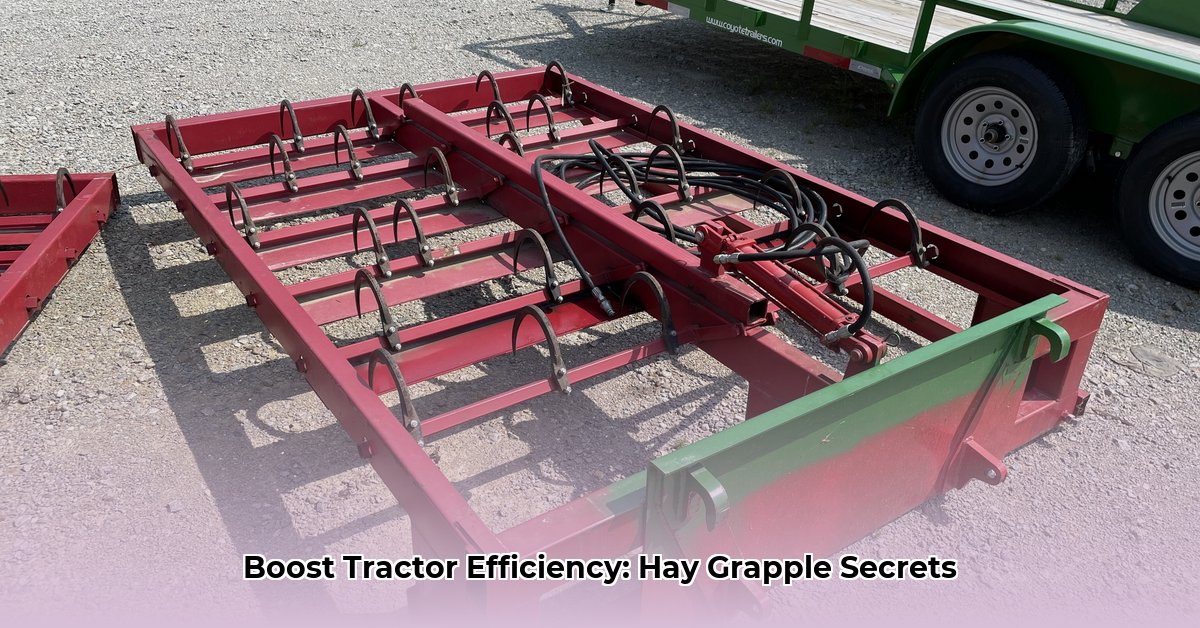
Hay Grapple for Tractor: Revolutionizing Hay Handling on Your Farm
Transforming hay handling on your farm requires efficient and effective tools. A hay grapple attachment for your tractor is a game-changer, acting as a powerful mechanical hand for effortless lifting, moving, and stacking of hay bales. This translates to significant time savings, reduced labor costs, and lower fuel expenses – increasing your profits and reducing your workload. Think of it as an investment in your farm's long-term productivity and sustainability. Isn't that a valuable proposition? Many farmers report a 20-30% increase in efficiency after adopting grapple attachments. For more information on tractor grapples, check out this helpful resource.
Choosing the Right Hay Grapple: Finding Your Perfect Match
Selecting the ideal hay grapple requires careful consideration of several key factors. First, assess your tractor's horsepower and hydraulic capacity (the power needed to lift and control it) to ensure compatibility. A grapple exceeding your tractor's capabilities can lead to malfunctions and safety hazards. Next, determine the size and weight of your typical hay bales (square, round, or a combination). The grapple's tines (the grasping arms) must match your bale size for effective handling. Consider your farm's terrain; uneven terrain might favor a smaller, lighter model. Finally, prioritize construction quality. A durable, high-quality grapple made from robust materials will serve you longer, minimizing long-term costs; cheap alternatives will require more repairs and replacements. Remember, a well-built grapple is an investment in long-term efficiency and savings.
Operating Your Hay Grapple: A Step-by-Step Guide
Safe and effective grapple operation involves a straightforward, step-by-step process:
Pre-Flight Check: Before starting your tractor, conduct a comprehensive inspection of the grapple. Look for loose bolts, damage, or any other issues. Verify that all components are securely attached. Check your hydraulic fluid levels; insufficient fluid can cause malfunctions.
Hitching Up: Carefully connect the grapple to your tractor's three-point hitch (the system connecting implements to a tractor). Ensure a secure and tight connection to avoid accidents. Consult your tractor and grapple manuals if needed.
Grabbing the Goods: Position the grapple over the bale(s) and engage the tines firmly. Avoid overloading the grapple – this can damage the mechanism and lead to accidents. Remember, safety is paramount.
Lifting and Moving: Lift the bales slowly and smoothly. Avoid jerky movements or sudden stops, particularly on uneven terrain. Steer with precision, opting for gradual turns instead of abrupt ones. Gentle maneuvers prevent damage and ensure safety.
Strategic Placement: Carefully lower the bales to their desired location. Slow and steady movements are crucial. Rapid actions can lead to dropping bales, causing damage and potential injury.
Unhooking: After completing your work, carefully detach the grapple from your tractor. Perform another quick visual inspection for any wear or damage.
Keeping Your Hay Grapple in Top Shape: Maintenance Matters
Regular maintenance is crucial for extending the lifespan of your hay grapple while preventing costly repairs and ensuring safe operation.
Lubrication: Lubricate all moving parts frequently, following the manufacturer's instructions. This prevents wear and tear, contributing to smoother operation.
Thorough Inspection: After each use, perform a brief visual inspection for any wear or damage. Address minor issues promptly; delaying repairs can worsen problems.
Addressing Repair Needs: Don't postpone repairs. Addressing issues promptly prevents small problems from escalating into major breakdowns. This saves money and ensures safe operation.
Weighing the Pros and Cons: Is a Hay Grapple Right for You?
Let's analyze the advantages and disadvantages:
| Feature | Pros | Cons |
|---|---|---|
| Efficiency | Significantly reduces labor and time, increasing productivity. | Initial investment cost. |
| Environmental Impact | Lower fuel consumption contributes to reduced emissions and a smaller carbon footprint. | Manufacturing process has environmental impact (mitigated by eco-friendly materials). |
| Safety | Minimizes manual handling of heavy bales, reducing the risk of injuries. | Improper use may lead to hazards; operator training is essential. |
| Cost | Long-term cost savings outweigh the initial investment. | Ongoing repair and maintenance costs (generally minor). |
How to Compare Different Hay Bale Grapple Attachment Models for Sustainable Farming
Choosing the right grapple involves more than just price. Consider lifecycle costs, including potential repairs and replacements over the equipment's lifetime. Durable materials and a reputable service network reduce the environmental impact by extending the grapple's operational lifespan. Efficient bale handling reduces fuel consumption and minimizes wear on your equipment. This holistic approach leads to a more sustainable and profitable farming operation. Remember to factor in ease of use and local dealer support. Choosing a model with readily available parts and service keeps your operation running smoothly.
Key Takeaways:
- Proper grapple selection significantly impacts farm efficiency and sustainability.
- Compare grapple capacity (bale weight), hydraulic capabilities, and build quality.
- Consider grapple size considering your operation's scale and storage space.
- Ease of use and local dealer support are crucial factors to consider.
- Prioritize safety and regulatory compliance.